LearnPresenceSelf-observation
What is self‑observation?
Self-observation is the simple act of seeing yourself here and now: paying quiet attention to your own thoughts, feelings, reactions and intentions, the way you would watch someone else, without judging or trying to fix anything. It is not complicated, but it takes practice, and everything else in the inner life begins from here.
On this page
What does self‑observation mean?
Are you aware of yourself right now? Not of these words, not of your opinion of me, not of the room you are in. Are you aware of you, the one who is watching? People spend their whole life looking at the world, but almost never at the one who is looking.
Self-observation simply means to pay attention to yourself. In the same way that you can give your attention to some flowers, looking at them while you observe them, in self-observation you learn to pay attention inwardly, to yourself. It is the simple act of seeing yourself here and now, in this moment.
It is the first practice, and unlike meditation or prayer, which you set a time for, it continues from moment to moment. It is a sort of mindfulness, you could say, except that we are not full of our mind; we are full of our own awareness.
What exactly am I observing?
When we say self-observation, what is the self? It is the totality of what you are experiencing. So you observe your thoughts and your emotions. You observe your instincts, the body’s needs and urges. You observe your personality: your likes, your dislikes, your tendencies. When I come into a room, am I a shy kind of character, or a talkative one? All of this just to observe. No judgment, just pure light.
Observe your intentions too: what do I want, why am I here? Most people are not very aware of this. When I was growing up, my mother always told me I should be a computer engineer. I even went to one of the best universities in the UK, and after a month I had a spiritual crisis, because it made me suffer. I had gone because everyone told me it was a good thing to do. I wasn’t really observing my intentions, or asking myself why I was doing it.
Why isn’t judging myself self‑observation?
Self-observation is not thinking about yourself, judging yourself or trying to improve yourself; I have written about that side of it in How to stop overthinking. The subtler trap is that we usually observe ourselves with an ego. “Okay, I’m going to observe myself… I hate this part about me.” That is not observation. We have started talking, condemning ourselves.
People observe themselves and say, “I have this, and I have that.” Already they are not observing, because they have said, “I am this, I am that, I have this story.” The attention has become trapped in the story, with no space left between the observer and the observed. I have made the mistake most students make, believing I was practicing self-observation, when it really takes experience, and time, for the awareness to sink deep enough to see yourself without identification.
How can just seeing something change it?
The ego lives through identification: believing you are this thought, this emotion or this belief. It can only control you while you are inside the reaction, inside what is not being observed. That is self-forgetting. But the moment you see it, the moment you bring your conscious attention to it, it begins to lose power. As simple as that.
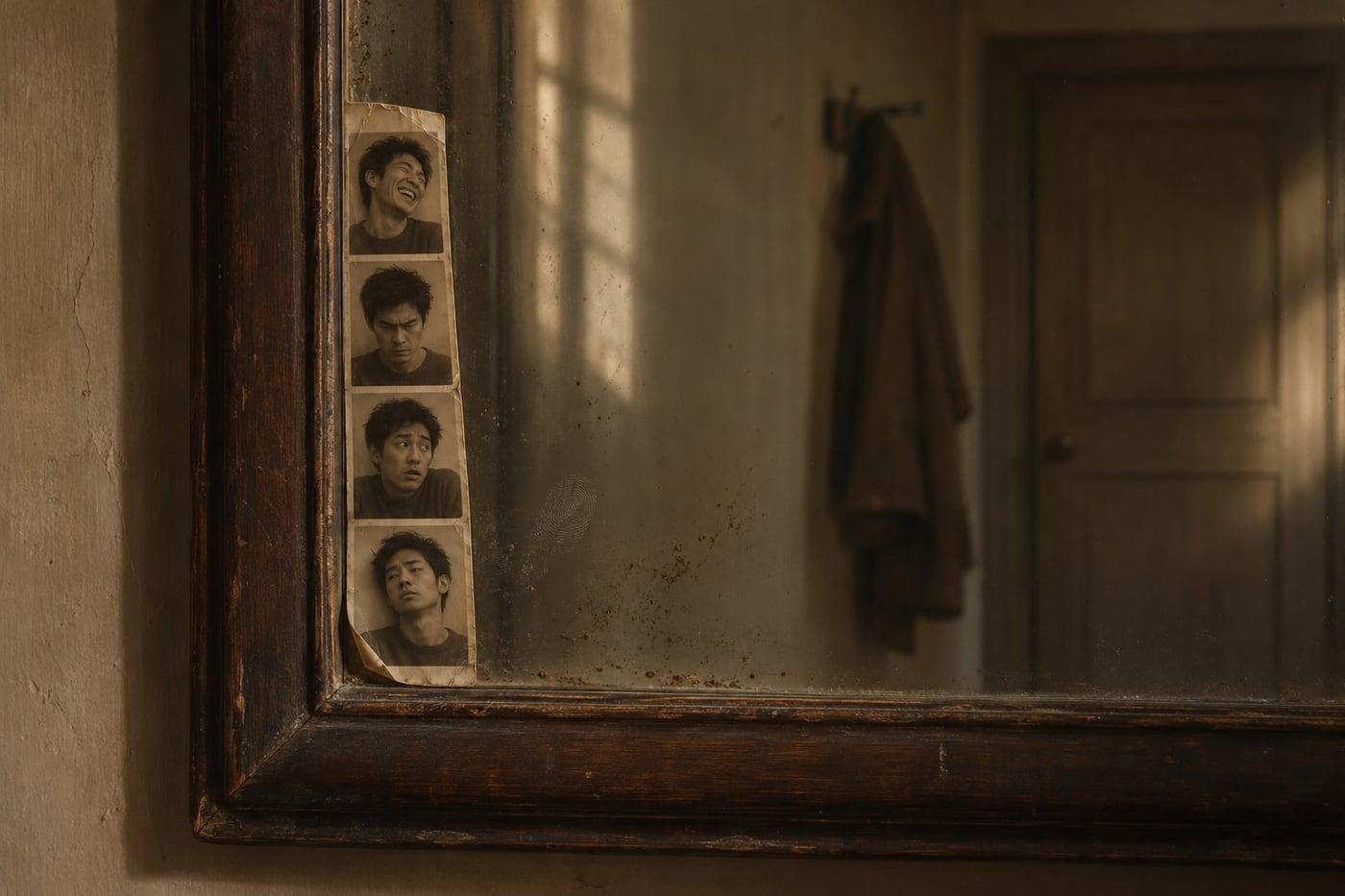
This is how self-observation leads to a natural kind of change. Looking honestly can be like looking in a mirror and seeing a monster, or a very sad creature, and some people fall into doubt and fear: “How am I going to change? I hate this.” But that is not true self-observation; an ego has taken over the awareness. The magic is that once you become aware of something negative, you have already taken the first step. What you become aware of will gradually change. It’s inevitable, as long as you don’t fall into other egos, like pride or self-pity.
The instinct to fix what you see will arise almost immediately, and fixing is just a busier way of leaking.
Kindness is the operative word. You are going to see things in yourself that you have spent a lifetime not seeing, and the sight is sobering. Every honest traveler before you has stood where you will stand, looked into the same churning machinery, and felt the same dismay. It passes.
The dismay is just one more film, and you may watch it go by like the others.
What is the difference between self‑observation and self‑remembering?
Self-observation without self-remembering is okay, but it won’t change very much. Anyone can say, “I’m going to observe myself now,” start watching their thoughts and emotions, and soon find them entertaining, laughing at all their own fascinations. We are observing, but we are getting lost in ourselves, identifying with the thoughts. Self-remembering is remembering to stay in that light.
When you remember yourself, it is like waking up out of a dream. If you have ever had a lucid dream, you know the moment: you are deep in some adventure, with a flying octopus perhaps, never once questioning it, and then you suddenly realize it is a dream. You remember yourself. Remembering yourself in the day feels like that, waking up and remembering yourself in a deeper way: the divine in each moment, the depths of you, your soul. The Key of SOL, which I describe in How to stay present all day, brings the two together.
How do I begin?
Start small. This is the first practice of Sealing the Vessel, and I ask you to trust its smallness.
- Three times each day, pause for one quiet minute. Tie the pauses to moments that already exist, soon after waking, around your midday meal, and somewhere in the early evening, so that no schedule is needed.
- Take one soft, unhurried breath, and arrive in the room through your senses. Feel the weight of your body, hear whatever sound is present, and let your eyes rest on one real thing.
- Then ask yourself gently, the way you would ask an old friend: where has my attention been since I last looked?
- Whatever you find, name it kindly in a word or two, as if noting the weather: worry, the phone, an old argument, a daydream, planning.
- Don’t judge what you find, and don’t try to fix it. Your only task is to see it, clearly and warmly, and then return to your day.
- At night, before sleep, go back through the scenes of your day in your mind’s eye, and write a single line in a notebook: what carried your attention away the most today.
Within a few days, the pauses will begin happening on their own, tiny awakenings arriving uninvited in the middle of ordinary life. When that begins, don’t congratulate yourself too loudly and don’t chase it. Just notice, smile, and carry on.
It takes effort at first, but a relaxed effort, without tenseness: an inner effort simply to be aware. We exercise our intellect and our body, and we also have to exercise our awareness. In the beginning it can seem exhausting, because we are so used to living from the ego, and when we stop certain fantasies and negative emotions from taking over, the ego tries to bring us back. There is a part of us that wants to stay in the sleepiness of unconsciousness. Meditation helps to make you strong for this, and these things take time: when a baby is born, it is not a man straight away.
 Watch the talk on YouTubeHow to Observe Yourself | Key I — 01 • The Art of Self Observation
Does self‑observation change how I see other people?
When I look at flowers, I am usually not seeing the flowers; I am seeing my interpretation of them. It is the same with people. Perhaps there is someone you don’t like, and you think you know why. Observe yourself in that moment, and you may find it is not really the person at all; it is the many voices, judgments and opinions in your own mind. Someone who is truly present, simply observing, will begin to understand that person.
You can see how significant this is. It relates to compassion, and to the teachings of Christ. Love is not so much giving compliments. Love is giving pure attention, with no judgment.
Where does self‑observation lead?
Be aware during the day, and you will be aware during the night. If I walk to a friend’s house thinking the whole way and never noticing the journey, my body is in the physical world, but I am in a dream, and when I sleep that night I won’t be awake there either. A very advanced person stays awake and aware even while the physical body sleeps, free to explore and learn: that is astral projection.
We can see our body, therefore we are not our body. We can see our thoughts, therefore we are not our thoughts.
Your actions, thoughts and emotions express your personality, but your attention reveals your consciousness. So no matter who you think you are, no matter how good or how bad you think you are, to observe is to awaken out of it, out of the dream of life. Every time you remember to observe, you return to the truth of your own nature, and the more you get in touch with your being, the more self-observation becomes self-remembering. You don’t have to be perfect. The point is simply to wake up, again and again, inside the moments you usually live unconsciously.